Sunday, December 27, 2009

Nicaraguan Wind Power


Not exactly news here but I just got back from Nicaragua and while I was there I stumbled on a 19 turbine wind farm.

Given the completely corrupt electricity infrastructure there (the president has his hands in three of the companies involved and all three buy over-priced products from each other), and given the proximity of the farm to the Costa Rican border, I actually thought this farm was in Costa Rica. But no, it turns out that it's in Nicaragua. Nicaragua's current primary power source is diesel.

Tuesday, October 6, 2009

Is the pipe big enough?


Questions about the capacity of Ontario's electricity infrastructure are raised by the Toronto Star in this article in response to the speed with which the Samsung Deal was pushed through. Although, the ministry claims that it's too early to be worrying about it...

Monday, September 28, 2009

New Wind Turbine on Grouse Mountain


I'm sitting in Lisa's apartment at 15th and Main enjoying my coffee with a view. From her place I can see from Golden Ears and SFU all the way to The Lions. The sun is about a hand above the eastern horizon somewhere over Metrotown and the bustle on Main Street is picking up to a pleasant din. There's a new addition to the skyline in my view. A giant turbine on top of Grouse Mountain is shouting loud and clear: Canada is going with Wind Energy. Whether it's a political statement, practical placement, or moral abatement the turbine is now there.

http://www.canada.com/technology/addition+skyline+shows+going+with+wind/1742677/story.html

Thursday, September 3, 2009

some cool small turbine designs


German wind company Venco was just purchased by Helix Wind in a move that should bring more affordable micro-wind-turbine design closure to your local Home Hardware or Canadian Tire. I'm beginning to wonder when more forward thinking designs like these two companies are putting out will start to by built on a larger scale.

Friday, August 21, 2009

Coastal Turbines in BC


http://www.cbc.ca/canada/british-columbia/story/2009/08/18/bc-haida-wind-turbine-investment.html

There's certainly something apocalyptic-looking about the picture used by this article, but I'd prefer these bad-boys to an oil-slick from a tanker or a ripped apart-hillside from a mine... My question to myself these days is a slightly negative one: Will all this renewable energy actually replace the non-renewable stuff on which we so desperately depend? Or are we just encouraging more use and glut in our energy consumption by simply increasing our capacity? I'm not going to feel better about things until there are no more plans to build coal-fired power plants.

Wednesday, July 22, 2009

Grassroots Commercial Wind

A short article in the Vancouver Sun about the first windmill to sell power back to the grid in Canada. An interesting diversion.

http://www.vancouversun.com/business/fp/Pincher+Creek+lessons+science+wind/1809937/story.html

Tuesday, July 14, 2009

Small Quiet Egyptian Wind Turbine Design

I mentioned a slower moving, quiet, bird/bat friendly wind turbine design in an earlier post. Here's a video showing the design in action. Apparently it was used by the ancient Egyptians to grind wheat. Pretty cool. Check it out.

Four Doctors Argue in Favour of Wind Energy

A recent post in the Globe and Mail has four doctors arguing that wind energy--though not without risk--is far healthier than the alternatives.

Wednesday, July 8, 2009

Wind Turbines and Health Concerns


Serious studies about the possible health risks of wind turbines are starting to crop up, like the one announced in the Globe and Mail this morning as well as the work done by Dr. Nina Pierpont. All of the health concerns that I've read about so far are centered around the turbines emitting extremely high levels of infrasound (sound below the threshold of human hearing: about 15hz).

The New Zealand Wind Energy Association claims that modern wind turbines don't emit nearly the same levels of infrasound as older turbines do. And though I am somewhat suspicious that this site may have a slightly biased agenda, it does seem clear that engineers are aware of the infrasound problem and are aggressively moving to address the issue in future turbine design. A recent conference in Denmark was held to discuss this problem and the proceedings from this conference can be purchased from the conference site.

In any case, wind energy developers would do well to pay mind to the technological advancements aimed at reducing infrasound. I predict infrasound levels from wind farms will soon be regulated.

Sunday, July 5, 2009

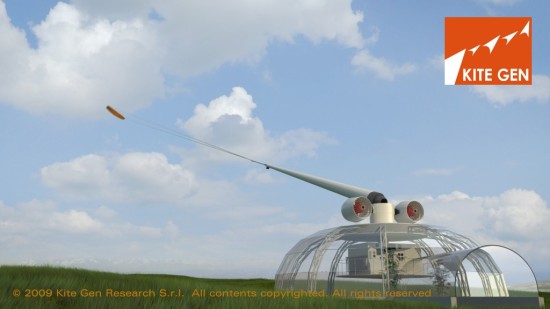
High Altitude Generator Technology


A very cool technology that uses kites was reported on this morning. It's worth a quick read. Can you imagine how this would look in the sky? Bizzarre, but cool, I'd think.

http://europe.theoildrum.com/node/5538

Thursday, July 2, 2009

Battery and Storage Technology

In his recent article on some of the misconceptions about the feasibility of replacing conventional power sources with wind, Chris Bell points out there is no reliable method of storing electricity produced in the peak wind hours. Unfortunately Bell, doesn't seem to be aware that this is a well-known problem in the wind-energy industry and is being overcome very quickly.

ZESS 500: This is new zinc based storage system that will be used at the Dundalk Institute of Technology in Ireland. The system will be installed alongside their existing wind turbine--which is already providing half of the Institutes power needs.

Encore Clean Energy:
This Vancouver-based company is developing compressed-air-based storage systems using their proprietary device, the "MPG". "The MPG can use many different sources of energy - one of them the compressed air from these proposed wind energy storage facilities - to generate the pressures required to propel the MPG's "Magnetic Piston" at high velocities, back-and-forth, through a linear alternator to generate power according to Faraday's Law of Induction." - from energybulletin.net

Battery Stimulus Package:
The US government is also aware of the storage problems of wind (and many other alternative, clean energy sources). The Congressional stimulus bill speaks for itself. "The nearly $790 billion economic stimulus legislation contains tens of billions of dollars in loans, grants, and tax incentives for advanced battery research and manufacturing, as well as incentives for plug-in hybrids and improvements to the electrical grid, which could help create a market for these batteries." from technologyreview.com

Tuesday, June 30, 2009

World Wind Energy Award 2009 goes to George Smitherman, Energy Minister of Ontario

Some of the buzz of this award is suggesting it places Ontario at the forefront of wind development in North America.

http://www.wwindea.org/home/index.php?option=com_content&task=view&id=248&Itemid=40

Centreflow.ca Article

Centreflow.ca: a news source on renewable energy in Canada. Just published a good synopsis on the state of wind energy in Canada, outlining the benefits, drawbacks, and thoughts on an incrimental, sustainable growth in the industry.

Good quotes:

"Secondly, the wind industry needs to mitigate its inherent drawbacks. One encouraging development is “urban turbines” for use in small settings – even backyards. Based on ancient Egyptian windmills, the turbines don’t look like massive propellers, but hand-powered lawn mowers placed vertically.

With more surface area devoted to harnessing the wind, they spin much more slowly (up to twice the speed of the wind), making the blades visible to bats and birds, and thus much safer. The urban turbines are also quieter, and relatively cheap – a small model can supply around two-thirds of a typical household’s energy needs; a medium-sized version can power an entire house."


Building a Green Energy Economy

The Canadian federal government is certainly convinced. Ottawa has committed to reducing greenhouse gas emissions by 20 per cent by 2020, setting aside $702-million aside for development of a more sustainable environment through 2011, including $400-million to transform to a “Green Energy Economy.”

Wind energy is a lynchpin of this plan. CanWEA believes wind energy can satisfy 20 per cent of the nation’s electricity demand by 2025 – a mere 16 years away. Among other economic and ancillary benefits, it’s estimated this would reduce Canada’s greenhouse gas emissions by 17 megatonnes.

To achieve this plan, three things need to happen. First, Canada and its regions need smart investment and to play to their natural strengths and advantages. Second, the wind industry needs to continue working on mitigating wind energy’s weaknesses. Third – and let’s not mince words here – a massive commitment and capital investment is required."

First Post

I've started this to centralize and share my efforts to learn more about the wind energy industry and the challenges it faces in Canada and worldwide.

I'm John Tennant and my father and sister are wind energy developers in Ontario.